About CEORL-HNS Video Atlas
The CEORL-HNS Video Atlas is produced by the Confederation of European Otorhinolaryngology – Head and Neck Surgery (CEORL-HNS) and the Y-CEORL (Young CEORL) subgroup. The Video Atlas is endorsed and built in collaboration with European subspecialty societies: EHNS, ESPO, ELS, EAONO and ERS.
The website was launched in April 2026 during the 8th Congress of the Confederation of European ORL-HNS in Gothenburg, Sweden, under the leadership of founding editor Professor François Simon.
The editorial board is comprised of senior CEORL board members, Y-CEORL board members, and members of the subspecialty societies.





Aims and scope
Our mission is to build the leading online video reference in otolaryngology—head & neck surgery—for both trainees and experienced surgeons. The platform publishes high-quality, video-based tutorials and case reports covering the full spectrum of ENT practice—from fundamental procedures to advanced and innovative techniques. We welcome structured surgical videos from all ENT subspecialties. Each submission must clearly demonstrate key operative steps through well-edited clips with instructional narration, supported by concise explanatory text and relevant imaging or graphics when appropriate.
Tutorials present standard procedures and core surgical skills in a clear, step-by-step format, reflecting everyday clinical practice and established techniques.
Case reports highlight uncommon scenarios, technical adaptations, or innovative approaches. All submissions are subject to rigorous editorial standards regarding educational value, originality, and video quality.
Our primary audience is residents and fellows in training. For each core ENT procedure, we particularly encourage different submissions that may present technical variations or different strategies or instruments, acknowledging that surgical practice may vary while achieving similar results for the patients. By showcasing diverse approaches, the platform aims to broaden perspectives, stimulate critical thinking, and reflect the realities of modern ENT surgery.
Ethics and GDPR
The development of surgical educational videos is a major advance for training, skill transmission, and global knowledge sharing. However, operative recordings inherently involve personal health data, even when patients are not directly identifiable. Images of anatomical structures, rare pathologies, timestamps, voices, or contextual details may allow indirect identification. For this reason, surgical videos must be treated as sensitive data under data protection regulations such as the GDPR. Ethical practice requires more than simply removing names or blurring faces. Pseudonymized content can still carry a theoretical risk of re-identification. Moreover, surgical recordings fall under medical confidentiality, which remains a fundamental and, in many legal systems, stringent obligation for healthcare professionals.
For educational surgical platforms, GDPR compliance is not merely administrative—it is a framework for trust. This includes:
- Clearly defining the purpose of recording and reuse (care, education, research)
- Obtaining explicit, informed, and documented patient consent when required
- Limiting contextual information to what is strictly necessary for pedagogy
- Defining retention periods and ensuring traceability of data processing
- Regulating international transfers and third-party access
Particular caution is required in pediatric surgery and facial procedures, where identification risks are higher. Ultimately, ethical and GDPR-compliant video education protects patient dignity, reinforces public trust, and safeguards the credibility of the surgical community. Innovation in surgical training must always be balanced with confidentiality, transparency, and professional responsibility.
Editorial board

François Simon
Editor in Chief
Université Paris Cité, Hôpital Necker-Enfants Malades, AP-HP
Paris, France
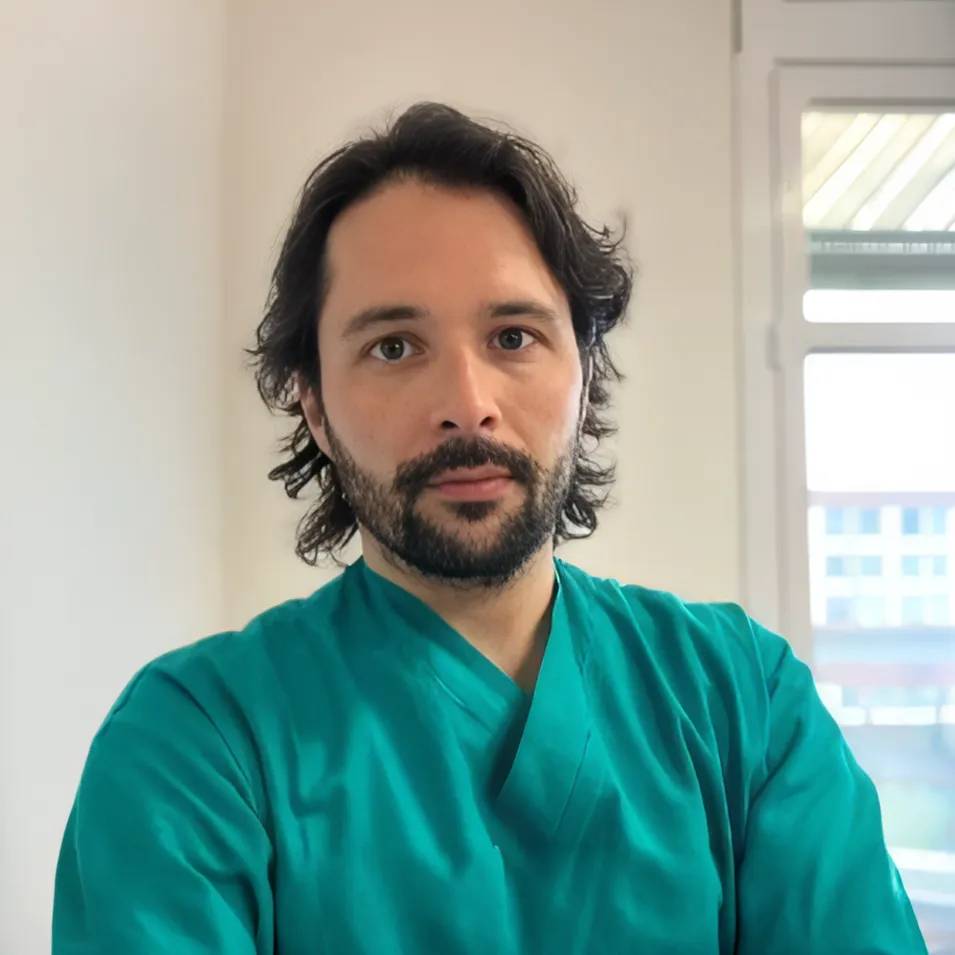
Vittorio Rampinelli
Steering committee
Centro San Giovanni di Brescia
Brescia, Italy

Sarah Atallah
Steering committee
Sorbonne Université, Hôpital Tenon, AP-HP
Paris, France

Daniele Borsetto
Steering committee
Cambridge University Hospitals
Cambridge, UK

LUKAS ANSCHUETZ
Steering Committee
University Hospital of Lausanne (CHUV) and University of Lausanne (UNIL), Switzerland
Domain editors
To be decided